
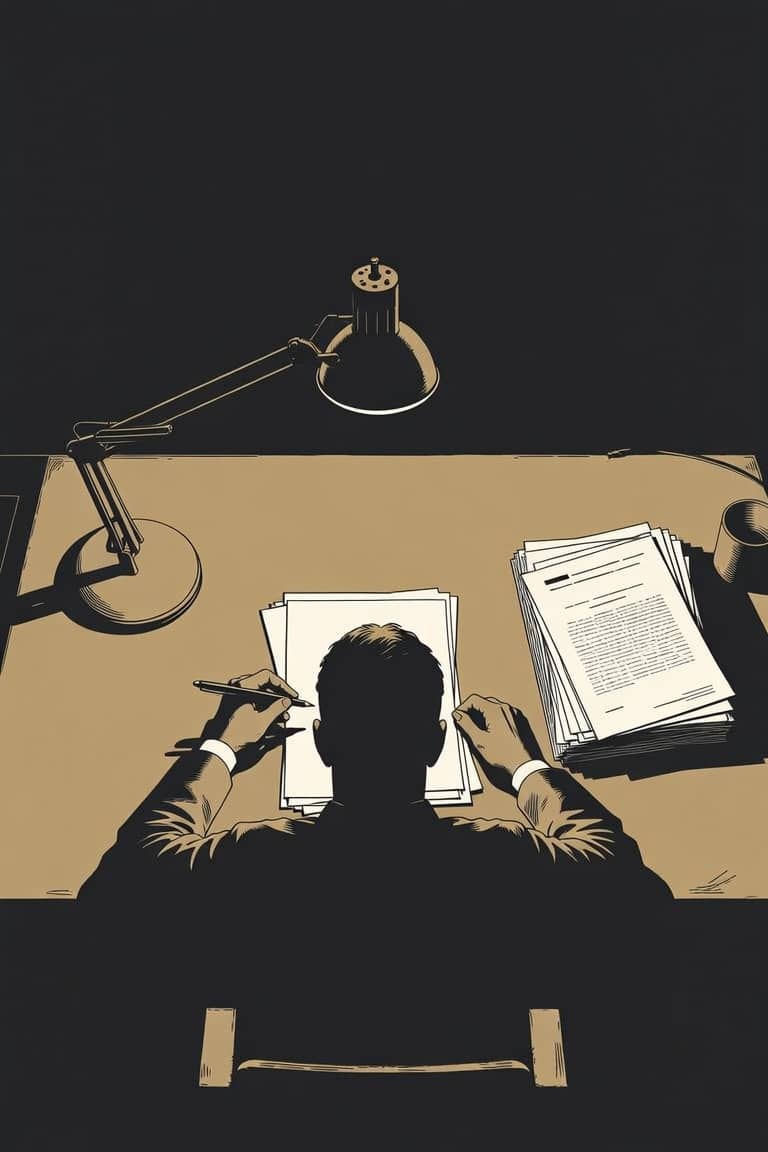

Recently I gave a talk to 38 cybersecurity professionals about how to communicate so their work actually lands. Not just reports, dashboards, briefings, and risk registers, but meaning. The whole talk hinged on one idea: there’s always a story being told about your work, and if you don’t tell it, someone tells it for you.
Be the storyteller, or be a character in someone else’s story.
I didn’t research that line. Burnout taught it to me years ago, the expensive way. Bitter lessons stick.
Which is exactly why it’s worth writing about. Knowing it cold hasn’t stopped me from sliding back into being a character in someone else’s story. More than once. I can teach this thing fluently and still catch myself living the opposite.
The problem wasn’t not knowing
Let me be clear about what I’m confessing here, because it isn’t ignorance.
I figured out the right story to tell myself about my Work a long time ago. By Work, I don’t mean your job description. I mean the deeper body of contribution you’re trying to build with your life. I’ve got the clarity. I know what I’m here to build and why it matters to me. If knowing were the finish line, I’d have crossed it years ago.
Knowing your story is the straightforward part. Consistently telling it is a daily fight.
Because the organization you work for is writing a competing draft about you every day. And its version is persuasive. It comes with a salary, a title, and applause from people you respect. If you’re lucky, an office with a decent view. Every promotion is the org saying “This is who you are now,” and handing you a cheque to agree.
So you can have complete clarity about your Work and still wake up on Monday playing a character in the Job’s story. Not because you forgot who you are and what your Work is. Because the Job’s version of you is the one that signs your paycheque, and that’s a hell of an incentive to keep reading from its script.
I’ve noticed it in small ways. Saying yes to work that made perfect sense for the role but made no sense for the life I’m building. Feeling proud of being needed for problems I don’t actually want to keep solving. Letting the title do the quiet work of identity because it was easier than re-explaining myself to myself.
That’s the thing I underestimated for years. Authorship isn’t a discovery you make once and file away. It’s a discipline. The story you settled on five years ago gets quietly overwritten while you sleep if you don’t keep re-asserting it.
Everyone’s pointing the skill the wrong way
We’re all getting better at telling our story to other people. Managing up, building the personal brand, getting visibility in the room. There’s an entire industry built to teach you how to narrate your work to your boss.
Almost nobody is working on telling a compelling story about their Work to themselves.
When you don’t, that void doesn’t sit there politely waiting for you. It gets filled. Your title fills it, your employer reinforces it, your LinkedIn headline calcifies it. And your parents wrote the first draft of it decades ago, which most people never get around to editing. Eventually the shorthand becomes the self. “I’m a director.” “I’m a policy person.” “I’m the cybersecurity guy.” Useful labels can easily become tiny cages.
So you end up the main character in a story you didn’t write. You’re competent, you’re well-paid, and you’re living inside a role someone else built for you. It looks like winning, but it feels like performing a part you didn’t audition for.
The same tips, turned inward
Here’s what got me while I prepped that talk. Every tip I gave those 38 people was aimed outward, at stakeholders. But you can learn a lot if you turn the same tips inward.
Don’t just dump information on people, I said. But that’s exactly what we do to ourselves. We pile up achievements, metrics, and highlight reels, then mistake the pile for a story. It isn’t. It’s inventory.
Answer “what’s in it for me” for your audience, I told them. You can answer the org’s version flawlessly. You know what’s in it for the company, the branch, the boss, the team. When’s the last time you answered it for yourself?
Take the audience on a journey, I said. Where are we now, where are we headed, why this route. You can map the org’s roadmap in your sleep. Try mapping your own and watch how fast you stall out.
The stakeholder you keep ignoring is your future self.
You’ll happily do that work for the people above you. But you won’t do it for the person you’re going to be in ten years.
“But I already know all this”
Right about here, the analytical brain pipes up. Fine, but I already know all this.
Yeah. So do I. That’s not the reassurance you think it is.
The people most at risk here aren’t the clueless ones. They’re the fluent ones, the people articulate enough to explain the entire trap while sitting dead centre in it. I gave an hour-long talk on this. I can diagram it on a whiteboard. None of that is the same as doing it on a random Tuesday when the Job is quietly pulling me back into its story.
The clarity tricks you into thinking the work is finished. It isn’t. The work was never the knowing.
What to do today
You don’t fix this with a sabbatical or a vision quest. You fix it by writing one paragraph. The first sentence of a story you actually hold the pen on.
So here’s the move. Give it ten minutes. You’re the only audience.
Write the three-line journey for your Work, not your Job.
- Where I actually am right now. The honest version, not the LinkedIn one.
- Where I’m trying to go. The Work, not the next rung on the ladder you feel obliged to climb.
- Why that’s the route.
Nobody else reads it. If you stall on line two, don’t call it failure. Call it the finding. It means someone else has been writing that line for you, and you’ve been letting them.
Then don’t file it away. Put it where you’ll actually see it. Taped to the monitor, pinned in your notes app, whatever it takes. The org redeploys its version of you every Monday, and if you’re not re-asserting yours, you default to theirs.
That’s the whole move. Ten minutes, one paragraph, and a place to keep it. Pick up the pen, or keep reading from their script. Your choice.
I’ll be doing it too. Turns out knowing the lesson and living it are two different jobs. I’m still on the hook for the second one.